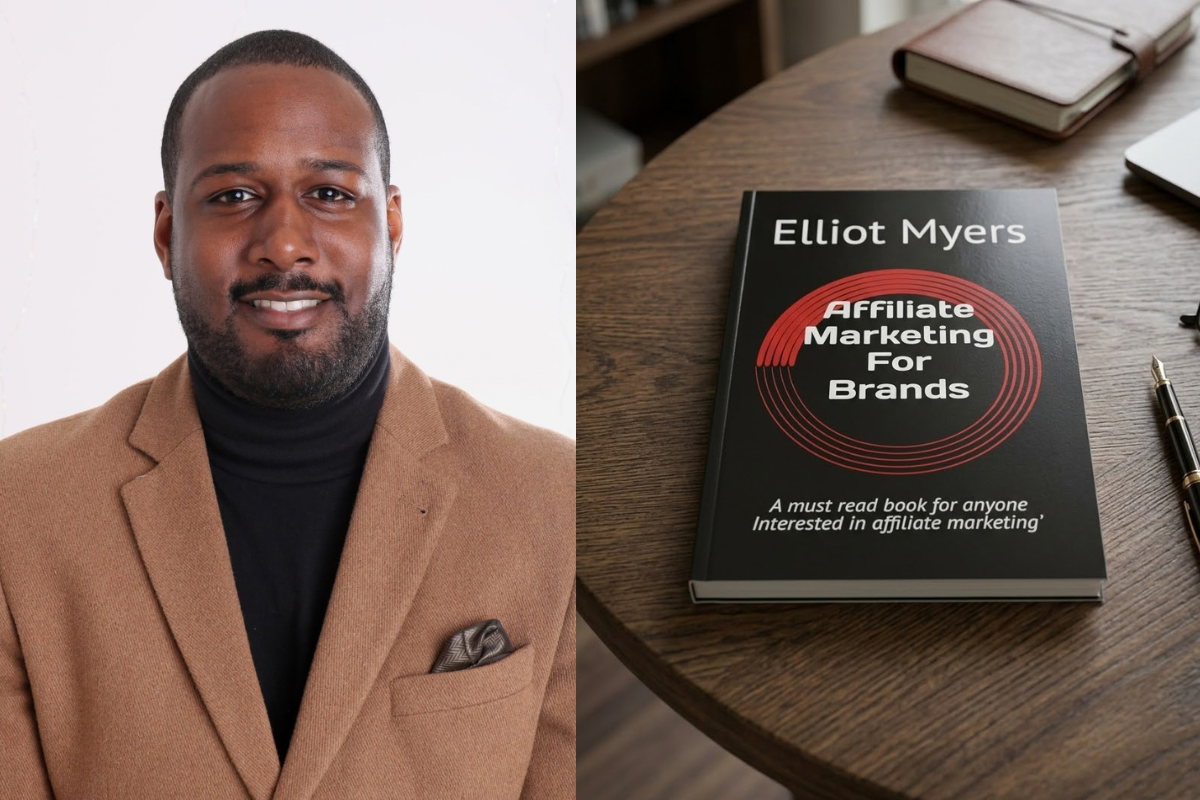
Elliot Myers, founder of The Affiliate Marketing Advisor (TAMA), has written a new book, Affiliate Marketing for Brands – designed to help brands better understand the role, value and potential of the affiliate channel.
As a founding member and long-standing supporter of the APMA, Elliot is generously donating all profits from the book to the APMA, with donations planned annually.
As a not-for-profit trade association, support like this helps us continue the work we do on behalf of the industry – from representing the channel with regulators and policymakers, to developing standards, producing research and helping the industry make a stronger case for affiliate marketing.
Affiliate Marketing for Brands is aimed at both those working directly in the channel and the senior decision-makers who need to understand its commercial value. It tackles some of the misconceptions that continue to surround affiliate marketing and provides practical frameworks for demonstrating the role affiliates can play in creating and capturing demand.
So, if you work in affiliate marketing, work with brands that could benefit from understanding the channel better, or know someone starting their career in the industry, we’d encourage you to pick up a copy – and share it.
We caught up with Elliot to find out why he decided to write the book, what he thinks brands still misunderstand about affiliate marketing, and why he chose to donate the proceeds to support the APMA.
What prompted you to write ‘Affiliate Marketing for Brands’?
I wrote this book to give everyone in our industry a universal language to justify the channel’s value to laypeople. We face familiar challenges, stigma, budget cuts, and misunderstandings. I wanted to provide a standard framework to help practitioners prove their worth. A better universal understanding of the channel protects jobs, incentivises brands to increase ad spend, and expands teams. A rising tide lifts all boats.
Why did you feel now was the right time for it?
Because affiliate marketing is still heavily misunderstood by the people outside of it, and crucially, those are the people making the big budget and hiring decisions. Right now, we need a way to offer defensible results to the boardroom. The book aims to help our industry make a compelling, commercially rigorous case to these stakeholders. Investing in affiliates isn’t just an add-on; it’s an essential growth engine.
Who did you have in mind when writing the book?
New starters. I want this book to serve as a foundational guide that inspires fresh talent to achieve rapid success. Ultimately, the hope is that it encourages them to contribute their own ideas, frameworks, and books in the future to keep strengthening our industry.
What do you hope they’ll take away from it?
I want them to fall in love with the industry and feel equipped to make it better. If they master the frameworks in the book, they can solve the complex problems that overcome historical stigma and mistrust, proving that affiliate marketing is fundamentally about human advocacy and tangible value.
What do you think brands most commonly misunderstand about affiliate marketing?
The biggest misconception is that affiliates only capture demand created by other channels. That’s why the core of the book proposes ‘The Standard Model.’ It repositions affiliates as a channel capable of both creating new demand and capturing existing demand. Through approaches like the ‘Fluid Funnel,’ brands can see how affiliates actually influence every stage of the purchasing journey incrementally, rather than just sitting at the bottom of the funnel.
The affiliate channel has changed considerably in recent years. What do you think brands need to understand about the channel today that they perhaps didn’t five years ago?
The opportunity cost of ignoring it is now too great. Today, affiliates allow brands to reach and engage highly desirable audiences far more effectively and cost-efficiently than many traditional channels. If you aren’t investing, your competitors are capturing that share of voice. It makes strict commercial sense to invest adequately in affiliates to create and defend your competitive advantage, especially now that advances in tracking make proving added value easier.
If a brand could take just one piece of advice from the book and put it into practice tomorrow, what would you want it to be?
Adopt ‘The Standard Model’ approach and clearly define the precise purpose of your channel: To create and capture demand through trackable media that creates valuable consumer behaviours. If you focus relentlessly on driving tangible, value-added behaviours, you build a program that naturally addresses the most common boardroom objections and proves the true incremental value of affiliates.
Why are you donating all of the proceeds to the APMA?
Everyone in the affiliate industry benefits from having an independent body representing the thousands of us working within it. The APMA advocates for our commercial interests, protects jobs, unlocks investment, and ensures that upcoming regulation acts as a boon rather than a blocker.
They have already proven their value. Their influence recently helped shape decisions made by the Information Commissioner’s Office and other regulatory bodies. Without the APMA, we simply wouldn’t have a united voice to lobby regulators or explain how their decisions impact our livelihoods.
Other digital marketing channels have well-funded trade bodies fighting their corner to serve their interests. With the APMA, we finally have the same. Donating the proceeds of this book is my way of playing a part to ensure they have the funding needed to aggressively defend and grow our industry.
About TAMA
The Affiliate Marketing Advisor (TAMA) is a boutique agency based in Birmingham with a mission to make affiliate marketing valuable for every brand. Its experience spans B2B and B2C, working across brands including Square, Google, JD Sports, Clarks, Hugo Boss and Domino’s.
If you’d like to find out more about TAMA, visit the TAMA website or contact Elliot directly.